Commercial insulation
Full commercial insulation services for Eagle Pass businesses, including spray foam, rigid board, and blown-in applications for any building type.
Learn More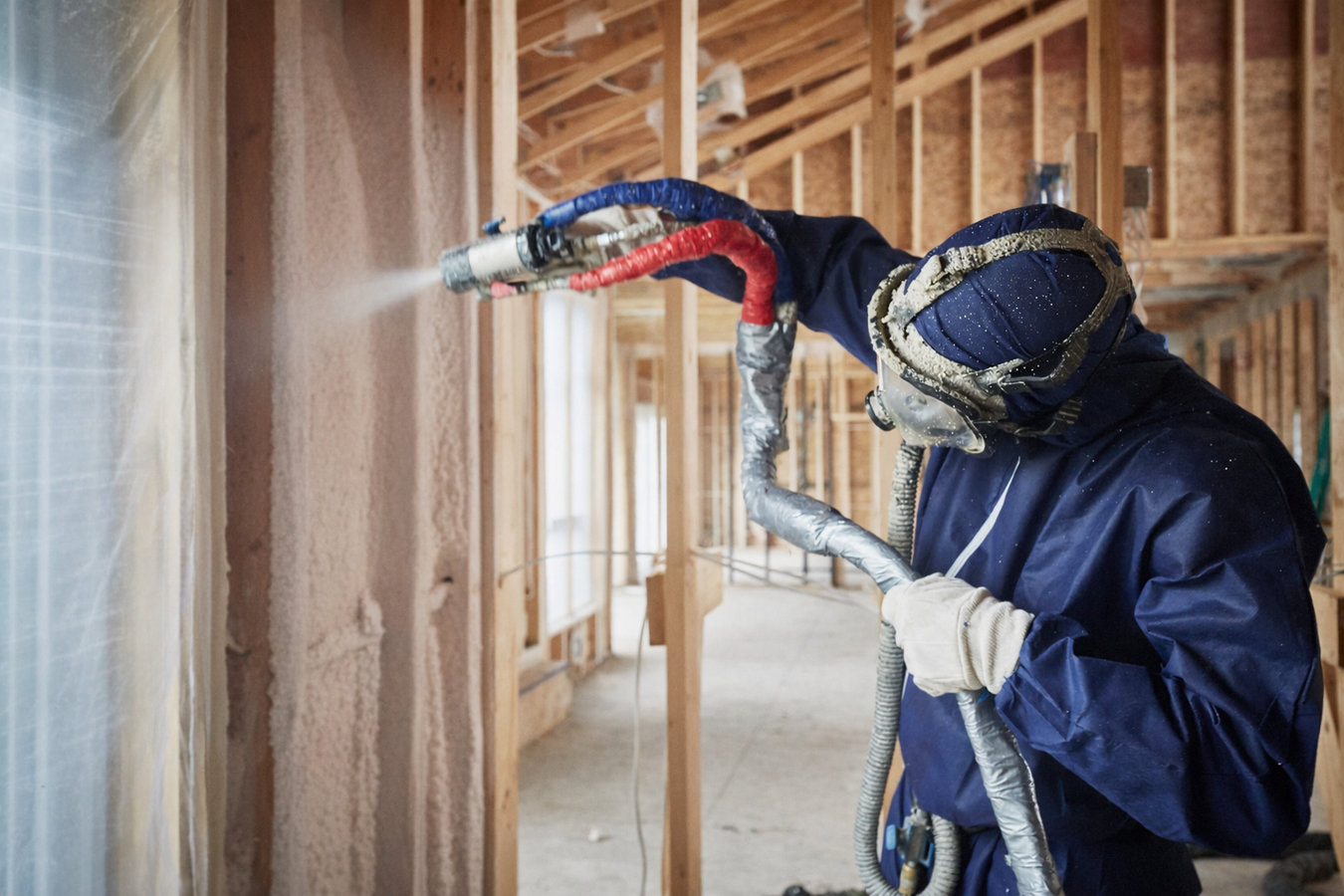
Hot air sneaks in through gaps that fiberglass batts simply cannot reach. Open-cell spray foam expands to fill every crack and corner, cutting your cooling costs and making every room in your Eagle Pass home actually comfortable.
Open-cell foam insulation in Eagle Pass starts as two liquid chemicals that mix on contact, expand up to 100 times their original size within seconds, and harden into a soft foam that fills gaps, cracks, and irregular spaces. Most residential jobs covering an attic or wall cavity take one to two days from start to finish.
In a city where summer temperatures regularly push past 100 degrees and the cooling season runs from April through October, every unsealed gap in your home is a direct path for heat to enter and conditioned air to escape. Open-cell foam closes those gaps permanently - which means your air conditioner does less work to hold the same temperature.
For areas where moisture is also a concern - like crawl spaces near the Rio Grande corridor - our spray foam insulation service covers both open-cell and closed-cell options, and we will recommend the right type for each area of your home during the free on-site assessment.
If your electricity costs jump sharply from May through September and your AC seems to run almost constantly, your home is likely losing cooled air faster than it should. In Eagle Pass, where temperatures stay above 100 degrees for weeks at a time, a poorly insulated home forces your AC to work overtime - and you pay for every extra hour it runs.
If one or two rooms in your home always feel noticeably hotter than the rest - especially rooms under the roof or on the west-facing side - heat is moving through the ceiling or walls faster than your AC can remove it. This is one of the most common complaints from homeowners in older Eagle Pass homes with inadequate attic insulation.
Hold your hand near an electrical outlet on an exterior wall on a hot afternoon. If you feel warm air coming through, your walls have air leaks that are letting heat in. These gaps are exactly what open-cell foam is designed to seal, and finding them yourself is a reliable sign that your home needs attention.
Homes built in Eagle Pass before modern energy codes were adopted were often insulated to the minimum standard of the era - or not at all in some cases. A quick look in your attic will often reveal bare rafters, thin batts, or insulation that has settled and compressed over the years. If you cannot recall any insulation work being done, there is a good chance it is overdue.
Open-cell foam is our go-to recommendation for attic insulation, interior wall cavities, and ceiling applications where air sealing and thermal performance are the priorities and moisture is not a primary concern. It delivers solid R-value per inch, expands to fill every irregular gap that cut batts leave behind, and provides noticeable sound absorption as a bonus - a benefit that closed-cell foam does not deliver as effectively.
For homeowners who are also looking at commercial insulation for a small business or rental property, we apply the same approach - assessing the building type, moisture exposure, and heat load before recommending open-cell, closed-cell, or a hybrid installation. The U.S. Department of Energy recognizes spray foam as one of the most effective insulation options for air sealing and thermal control in extreme climates.
Best for Eagle Pass homes where the attic is the primary heat gain pathway - fills rafters, around recessed lights, and over framing that batts cannot seal.
Best for homeowners adding insulation to existing walls during a renovation, or sealing the wall cavities in older homes that were built with little original protection.
Best for sealing the perimeter of the floor framing above a crawl space or basement - a common air leakage point in older Eagle Pass homes.
Best for homeowners who want to reduce noise between floors or between a garage and living space, where open-cell foam outperforms closed-cell for acoustic control.
Eagle Pass sits in the Chihuahuan Desert borderlands and regularly records summer highs above 105 degrees, with heat that persists well into September. For homeowners here, the primary job of insulation is not keeping warmth in during winter - it is keeping brutal heat out for six or more months of the year. A significant portion of the city's housing stock was built between the 1950s and 1990s, when insulation standards were far less demanding than they are today, which means the performance gap for many homes is large and the comfort improvement after a proper upgrade is dramatic. Homeowners in areas like Eagle Pass often see the most significant results precisely because their starting point is so low.
The proximity to the Rio Grande also means periodic humidity spikes - particularly during the summer monsoon season - that can affect how insulation performs over time. Open-cell foam absorbs moisture rather than blocking it, which is generally not a problem in well- ventilated attics but is worth discussing with your contractor for crawl spaces or any area with known moisture exposure. Customers in Del Rio and surrounding communities along the river corridor benefit from the same assessment before choosing open-cell versus closed-cell for their specific situation.
We respond within 1 business day. Tell us about your home and what you are hoping to fix - lower bills, cooler rooms, or both. We ask a few questions so we can come prepared.
A contractor visits your home and walks through the areas to be insulated - checking existing insulation levels, looking for moisture concerns, and measuring the space to give you an accurate quote.
The crew arrives with the spray equipment and works through the designated areas. Most residential jobs finish in one to two days. You stay out of the treated space for about 24 hours while the foam cures.
We walk through the completed work with you, confirm coverage meets the agreed thickness, and answer any questions. If a permit inspection is needed, we coordinate it so you never have to manage that process yourself.
Free on-site estimate. Written quote before any work begins. No obligation.
(830) 971-8829You receive a detailed written estimate after the free inspection. The final cost matches that estimate unless you request changes - no surprise invoices or add-ons that were not discussed upfront.
We are not a contractor passing through from San Antonio or Laredo. We are based in Eagle Pass and have worked on homes across Maverick County, which means we understand the specific heat load, humidity patterns, and housing stock of this area.
You receive a detailed written estimate after the free inspection. The final cost matches that estimate unless you request changes. We do not show up with surprise invoices or add-ons that were not discussed upfront.
Our on-site assessments are always free. You are under no obligation to proceed after the inspection. We want you to make the right call for your home, not a rushed one.
The Spray Polyurethane Foam Alliance sets the national standard for installation best practices, and we follow those guidelines on every job. When you work with Eagle Pass Insulation, you get a contractor who is rooted in this community and accountable to the people who live here.
Full commercial insulation services for Eagle Pass businesses, including spray foam, rigid board, and blown-in applications for any building type.
Learn MoreComplete spray foam insulation services covering both open-cell and closed-cell applications throughout your Eagle Pass home.
Learn MoreScheduling fills up fast as temperatures rise. Call today or submit a request online and we will get back to you within 1 business day.