
Open-cell foam insulation
A lighter, more affordable foam option suited to interior attics and wall cavities where moisture resistance is a lower priority.
Learn More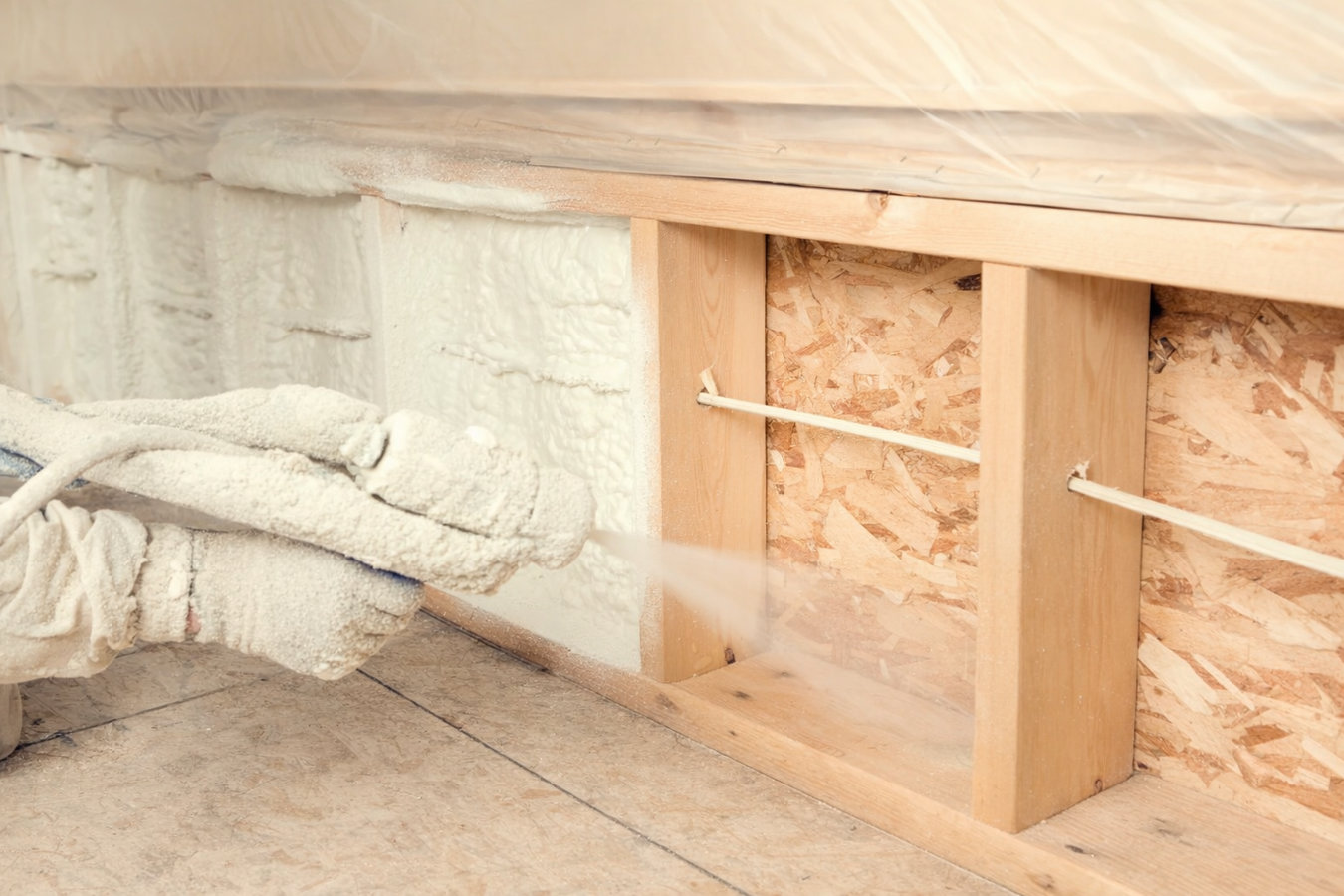
Eagle Pass summers push past 100 degrees for months, and the humidity off the Rio Grande makes it worse. Closed-cell foam seals air leaks and blocks moisture in a single application - giving your home the tightest thermal envelope available.
Closed-cell foam insulation in Eagle Pass is a two-part spray that expands on contact, hardens into a rigid, dense layer within seconds, and seals both air and moisture in a single pass - most residential attic or crawl space jobs are completed in one day. Unlike fiberglass batts that only slow heat transfer, closed-cell foam also seals the small gaps around pipes, outlets, and framing where hot air sneaks into your home.
In Eagle Pass, where the cooling season runs from April through October and the Rio Grande corridor brings seasonal humidity spikes, this dual performance matters more than in most other parts of Texas. Many Eagle Pass homes built in the mid-20th century have little or no original insulation in walls and attics - and for these homes, closed-cell foam is often the single biggest improvement a homeowner can make to comfort and energy costs.
Homeowners wondering whether spray foam is right for their whole home can also explore our broader spray foam insulation service, which covers both closed-cell and open-cell options depending on the area and the specific problem being solved.
If your air conditioner runs for hours and your living spaces still feel warm by mid-afternoon, your home is losing cooled air faster than the system can replace it. In Eagle Pass, where summer temperatures push well past 100 degrees, a home with poor insulation simply cannot keep up - and your utility bill reflects it.
Eagle Pass's summer monsoon patterns bring bursts of high humidity, and if your home feels sticky or clammy inside during those weeks, moisture is getting in through gaps in the walls or attic. Insulation that absorbs moisture loses its ability to slow heat transfer, and over time that moisture can cause mold or wood damage you won't see until it becomes a bigger problem.
Hold your hand near an interior wall outlet or a light switch plate on a hot afternoon. If you feel warmth radiating from the wall, outside air is finding its way in through gaps in the building envelope. This is especially common in older Eagle Pass homes where original construction left small openings around electrical boxes and framing joints.
Rodents and insects enter homes through the same small gaps that let in heat and moisture. If you have dealt with pests finding their way into your attic or wall cavities, those entry points are also energy leaks. Closed-cell foam fills those gaps permanently, addressing both the pest pathway and the insulation gap at the same time.
We apply closed-cell foam in the areas where its combination of high R-value and moisture resistance provides the most benefit. Attics are the most common application - the foam is sprayed directly on the underside of the roof deck, creating an unvented attic assembly that keeps the entire attic within the home's conditioned envelope. This is particularly effective for Eagle Pass homes where the attic is also used for HVAC equipment, since conditioned ducts in a conditioned attic lose far less energy than those running through an unconditioned space.
For crawl spaces and basement walls, closed-cell foam creates a continuous air and moisture barrier in spaces that are otherwise difficult to seal and insulate. We also apply it in exterior wall cavities during renovations where walls are already open. When only a portion of the home needs closed-cell foam and the rest can be addressed with a lighter product, we pair it with our open-cell foam insulation service to get the right solution in each area without overspending where it is not needed.
Best for homes where the attic contains HVAC equipment or ducts, creating a conditioned attic that dramatically reduces cooling system losses.
Best for moisture-prone spaces in Eagle Pass where both air sealing and long-term moisture resistance are needed in a single durable product.
Best for renovation projects where walls are already open and the homeowner wants the highest possible R-value per inch of wall cavity depth.
Best when different areas of a home have different insulation needs - closed-cell where moisture is a concern, open-cell where it is not.
The case for closed-cell foam in Eagle Pass comes down to two things that define this climate: sustained extreme heat and periodic humidity. The cooling season here stretches well past what most Texas homeowners experience, and closed-cell foam's higher R-value per inch means you get more thermal resistance without sacrificing space in a wall or attic. For older homes throughout Maverick County - many built in the 1950s through 1970s when insulation standards were minimal - a closed-cell foam installation in the attic or walls can be a transformative upgrade that finally makes those homes comfortable during the months that count most.
The moisture angle matters just as much. Eagle Pass sits on the Rio Grande, and monsoon season brings humidity spikes that push moisture into wall cavities and attic spaces in homes without a proper air seal. Closed-cell foam resists moisture absorption in a way that fiberglass and open-cell foam cannot, which means it continues to perform correctly even during the wet stretches when other insulation types start to lose effectiveness. Homeowners in Crystal City and Carrizo Springs face the same heat and humidity combination and benefit from the same closed-cell approach we bring to Eagle Pass.
We respond within 1 business day. We ask about your home's size, which areas you want insulated, and whether you have had any insulation work done before - so we come prepared.
A contractor visits your home and inspects the spaces where foam will be applied - typically the attic, crawl space, or wall cavities. You receive a written quote breaking down scope and price. Take time to read it and ask questions before signing.
Clear the work areas before the crew arrives. Confirm with your contractor that you, your family, and pets need to be out of the home during spraying and for a set period while the foam cures. Plan for at least a half-day away.
The crew sprays the foam in controlled layers - it expands and hardens within seconds. Most single-family Eagle Pass homes are completed in one day. Once cured, we walk you through the finished work before leaving.
Free on-site estimate with no obligation. We respond within 1 business day.
(830) 971-8829We give you a detailed written estimate on every residential and commercial job. You see the full scope, materials, and cost before a single dollar changes hands.
We are not a contractor driving down from San Antonio. We live and work in Maverick County and understand the specific heat patterns, humidity levels, and older housing stock that shape what closed-cell foam projects require here.
Closed-cell foam is not always the right answer for every space. We assess each area of your home and recommend the type of insulation - closed-cell, open-cell, or a combination - that actually fits your situation and budget.
You receive a detailed written estimate after the inspection. The final cost matches that estimate unless you request additional work. When the job is done, we walk you through the finished installation so you can see exactly what was done.
Closed-cell foam is a significant investment, and it deserves a contractor who is familiar with the conditions that shape how insulation performs in South Texas, and committed to doing the job right the first time. We are that contractor - close enough to Eagle Pass to be accountable to every homeowner we work with.
For health and safety guidance on spray foam application, see the U.S. Environmental Protection Agency. For spray foam industry standards, visit the Spray Polyurethane Foam Alliance.
A lighter, more affordable foam option suited to interior attics and wall cavities where moisture resistance is a lower priority.
Learn MoreFull spray foam insulation services covering both open-cell and closed-cell applications for Eagle Pass homes and businesses.
Learn MoreCall Eagle Pass Insulation today or request an estimate online. Free on-site assessments, no obligation, and same-week scheduling available for most jobs in Maverick County.